Be yourself; Everyone else is already taken.
— Oscar Wilde.
This is the first post on my new blog. I’m just getting this new blog going, so stay tuned for more. Subscribe below to get notified when I post new updates.
Be yourself; Everyone else is already taken.
— Oscar Wilde.
This is the first post on my new blog. I’m just getting this new blog going, so stay tuned for more. Subscribe below to get notified when I post new updates.
There was no real hero during the Solomon era, but there may have been a heroine. Solomon destroyed the establishment of marriage more than anyone that came before and I’m sure after him. We don’t know her name but this heroine was the Shulamite Woman.
The Shulammite spoke the first words in the poem “Let him kiss me”, and the last words “Make haste, my beloved,and be like a gazelle or a young stag on the mountains of spices.”She also provides most of the lines in the poem including the heartfelt speeches about the power of love. The Shulammite is the main figure in the Song of Solomon and the symbol of pleasure. But who is she? What’s her name? Where is she from?
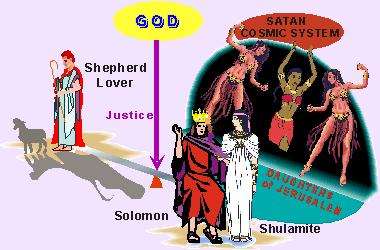
We don’t actually know her name, or really anything else besides the description the “Shulammite,” and it leaves us wondering. She does have some characterization throughout the Song. We see that she is probably just past the age of puberty which is implied by the response from her brothers. Then her response “my breasts are like towers” tells us that she may have already reached the age of sexual maturity. The brothers are responsible for her and they have punished her, by making her keeper of the vineyards. The Shulammite does describe herself and she says she is “dark and lovely”. This is a reference to her tanned skin because she says “the sun has looked upon me.” Working outdoors may also be associated with a lower social status. When she mentions her dark skin, she may be ashamed of it, but to me she sounds like she is proud of it and possibly boasting about it. Maybe woman during this time wanted tan skin just as they do today.
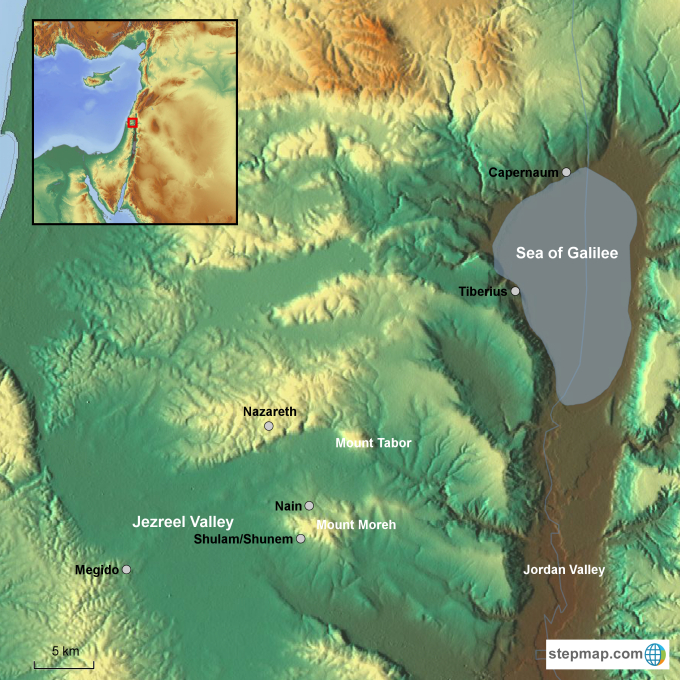
She is most likely called the Shulammite because she would have came from a place called Shulem, but there isn’t a place named Shulem. Therefore many scholars consider Shulammite to have connections with Shunammite, which is the people from Shunem. Shunem was a small town in northern Israel. Some researchers connect Shulem with Salem, believing Solomon’s lover was from Jerusalem.
One theory of the Shulammite is that she is the daughter of Egypt’s king, who of which Solomon married in 1 Kings, but who knows when it comes to Solomon. There is also no evidence supporting this theory in the song. Another theory mentions Abishag. Abishag was a young Shunammite who served King David in his old age which was also in 1 Kings. It is considered that Abishag may be the Shulammite woman. We know she was from Shunem, which could possibly be the same place as Shulem. Since she was David’s servant, Abishag would probably have known David’s son, which is in fact Solomon. Solomon’s half-brother Adonijah attempted to marry Abishag, and strangely enough, Solomon prevented the marriage.
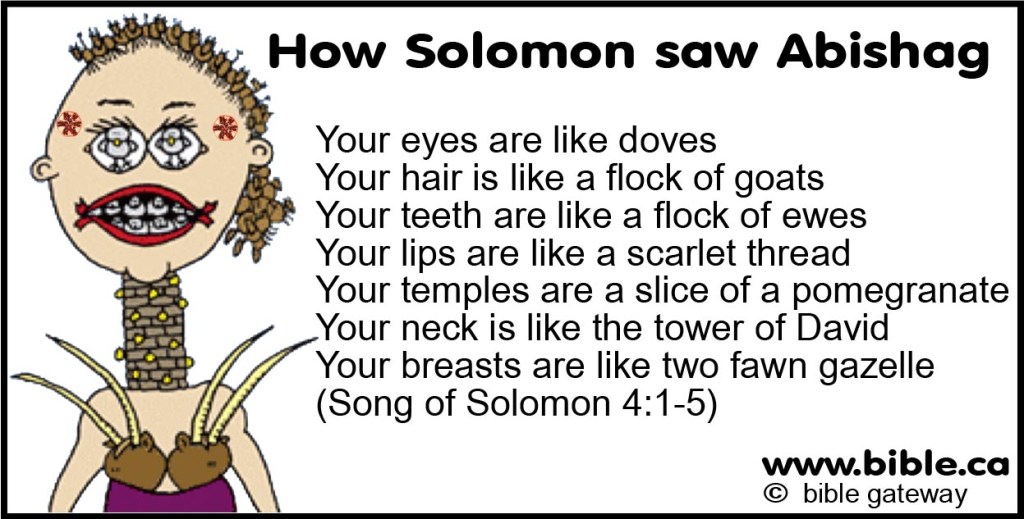
After years of researching, scholars still do not have any information about this woman and probably never will. I, on the other hand, tend to agree with the theory that she is Abishag.
The title “Ecclesiastes” comes from a Greek word meaning a person is a preacher. Although no one is for certain who wrote the book we suggest that King Solomon wrote Ecclesiastes. The book of Ecclesiastes is different in scripture and there is no other book like it. It is the only book in the Bible that examines a human point of view rather than a divine point of view. This book bring man a word from God. It differs in many ways, it does not rely on the covenant, the status of Israel, prophecy, history, or the temple. Its focus is on man the creature and his life on earth. This book makes human life seem depressing.

The author got the ball rolling early in the book with “Vanity of vanities! All is vanity” (1:2). We sometimes translate vanity to meaningless, emptiness, or useless. The author is talking about the “emptiness” of life as he saw it. Saying that everything is meaningless sounds depressing, but this is the author’s point of view.“I have seen everything that is done under the sun, and behold, all is vanity and a striving after wind.” (1:14) Nothing made sense to him because he had already tried pleasure, work, and wisdom to try to repair his sense of feeling lost in the world.
The author then states that there is nothing new under the sun, and for the most part is painfully true. Yet even now several hundred years later and nothing has changed in the world or in the ideas of men. Life is like nature by the fact that it’s just a never ending monotonous cycle without much purpose.
“The wind blows to the south and goes around to the north; around and around goes the wind, and on its circuits the wind returns. All streams run to the sea, but the sea is not full; to the place where the streams flow, there they flow again.”(1:6-7)
So does pleasure make life better for the author. I mean even today we say “Enjoy yourself! Live it up!, YOLO!” At some point we as humans enjoy or find purpose by seeking pleasures, but that’s also meaningless according to the author. “I said in my heart, “Come now, I will test you with pleasure; enjoy yourself.” But behold, this also was vanity.” Pleasure will make life more enjoyable but it too will diminish.
The author then turns to wealth and wisdom for a sense of purpose. This too doesn’t satisfy him. We spend so much time trying to gain wisdom that we aren’t wise until our final years. We spend hours working to accumulate wealth and for the most part never get the opportunity to enjoy the wealth before we die. So these conclusions made the author hate his life. “So I hated life, because what is done under the sun was grievous to me, for all is vanity and a striving after wind.” (2:17)

Then in chapter 3 he views life from what we might call the existential viewpoint. “A time to be born, and a time to die; a time to plant, and a time to pluck up what is planted; a time to kill, and a time to heal;a time to break down, and a time to build up.” Some people call this viewpoint fatalism, because every living thing ends with death.
So If we just look and our existence such as the author does, setting beliefs aside, does human life on earth or “under the sun” have a purpose?
May, Peter. “The Book of Ecclesiastes Absurdity Pointing to Meaning.” Bethinking.org, 26 Feb. 2011, www.bethinking.org/is-there-meaning-to-life/the-book-of-ecclesiastes-absurdity-pointing-to-meaning
Missler, Chuck. “Is Life Really Worth Living?: The Book of Ecclesiastes: – Chuck Missler.” Koinonia House, 1 Jan. 2003, www.khouse.org/articles/2003/447/
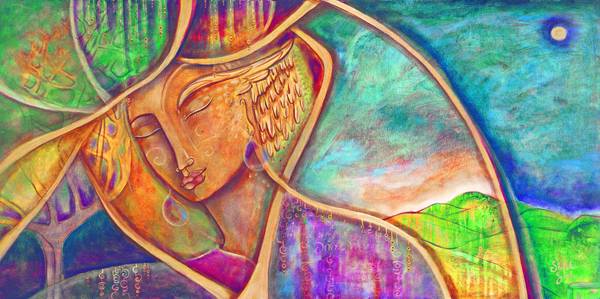
The book of Proverbs was written to give “prudence to the simple, knowledge and discretion to the young”, and to make the wise even wiser. Later in chapter 1 we are introduced to a character named Wisdom. She is a lady so we will refer to her as Lady Wisdom.
So who is Lady Wisdom? Lady Wisdom is a woman who has ideal qualities and she is greater than earthly treasures. Her fruit is better than gold, she walks in the way of the righteous and she grants inheritance to those who love her. From the text we see that Lady Wisdom was also a workman along with the protagonist, “then I was beside him, like a master workman, and I was daily his delight, rejoicing before him always.” So Lady Wisdom was with the protagonist during creation.
“For some ecotheologians, she morphs into some aspects of the Holy Spirit for Christians, the Shekinah for Jews, and doesn’t seem to get much play in Islam, due to their concepts of monotheism. She is first Mother who is made manifest by Jesus of Nazareth who is her child, and also the Sender for whom he is the Prophet par excellence in the earliest Jesus-movement.”
Carole Fontaine, Taylor Professor of Biblical Theology and History, Andover Newton Theological School
Readers of the Old Testament are familiar with real women and real situations so for there to be a co-creator along with the protagonist there may be a shock for some readers. I am sure that this one quote has caused an abundance of questions and concerns, but it is not to be taken literally.
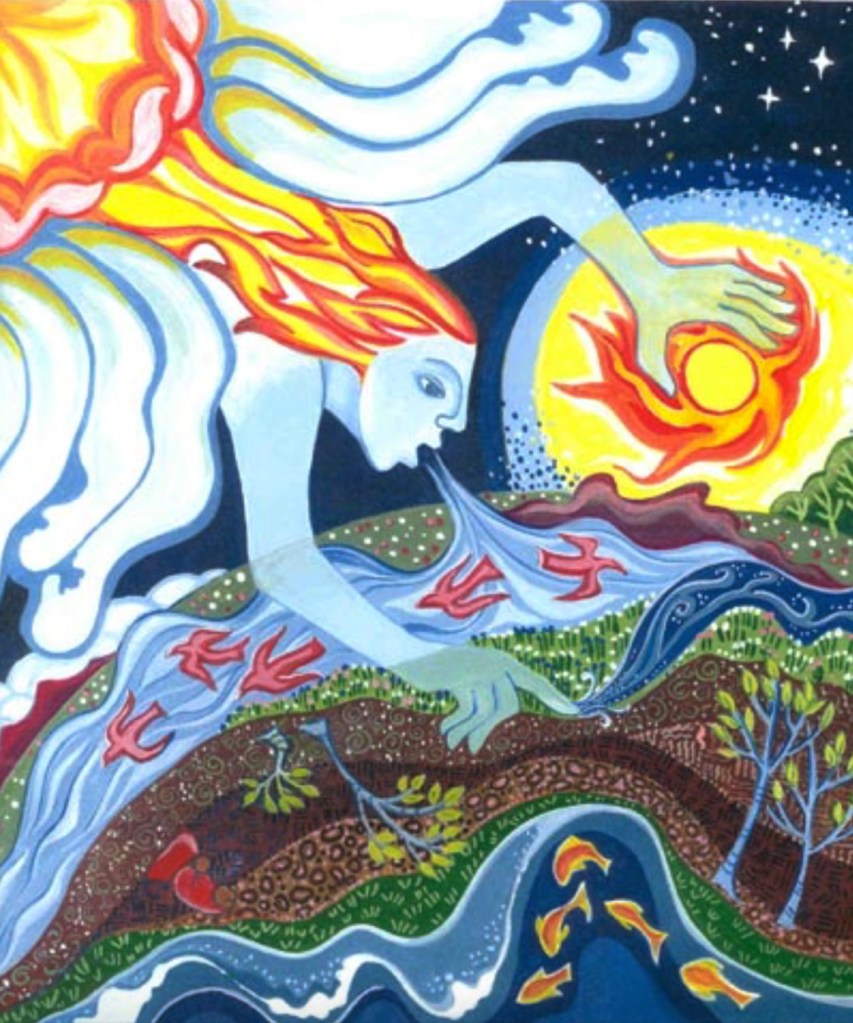
Of course she isn’t real, she is only a personification of the abstract quality of wisdom. The purpose of chapter eight is to praise wisdom. If there was a time when wisdom didn’t exist, then there was a time when the protagonist did not have wisdom. You can’t have the protagonist of the Old Testament not have wisdom. The entire Old Testament is basically about his wisdom, or the situations that the characters find themselves in when they either listen to his wisdom or not. So if the protagonist didn’t have wisdom he wouldn’t have been able to create wisdom in the first place. So the author, who we assume is Solomon, creates this fictional character that was an attribute of protagonist during the creation of the earth. We see in Proverbs 3:19 “the lord by wisdom founded the earth.”
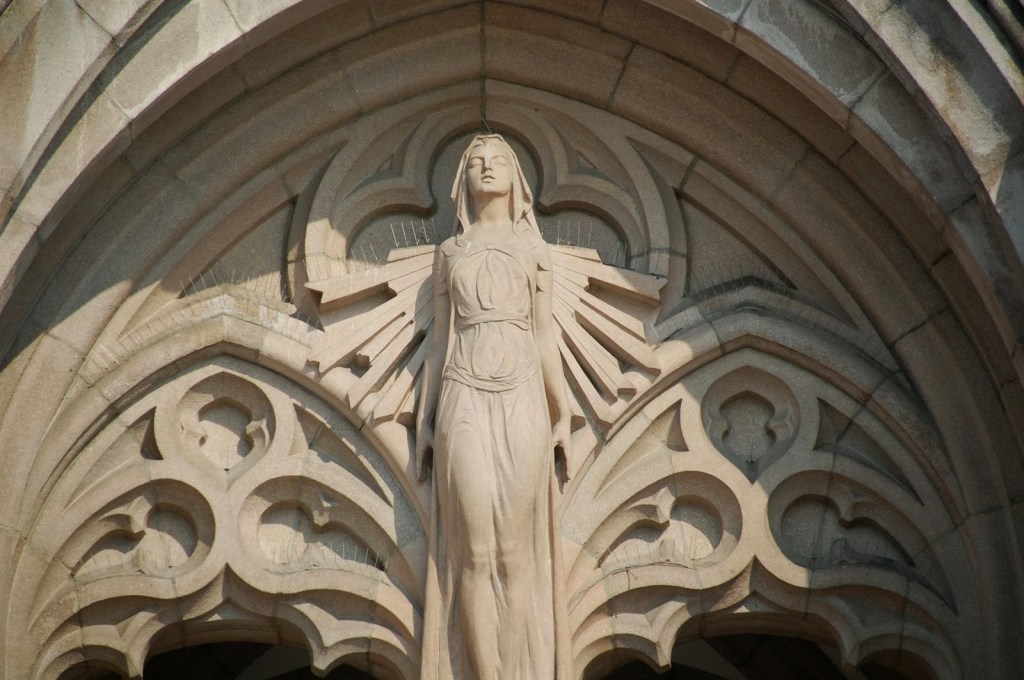
Why is Lady Wisdom a woman? We see the pronoun “her” and automatically assume that the character is a woman, but it may have to be intended that way. The Hebrew language along with Spanish and French uses grammatical gender whereas the English language does not. The Hebrew translation for “wisdom” is “chokmoth” and this is feminine so it’s only natural to consider Lady Wisdom a woman.

In the beginning of the book of Job, Satan is there. Satan is in the presence of the protagonist. “Now there was a day when the sons of God came to present themselves before the Lord, and Satan also came among them.” (Job 1:6) Satan just shows up out of nowhere and when asked where he has been he answered, “From going to and fro on the earth, and from walking up and down on it.” (Job 1:7)
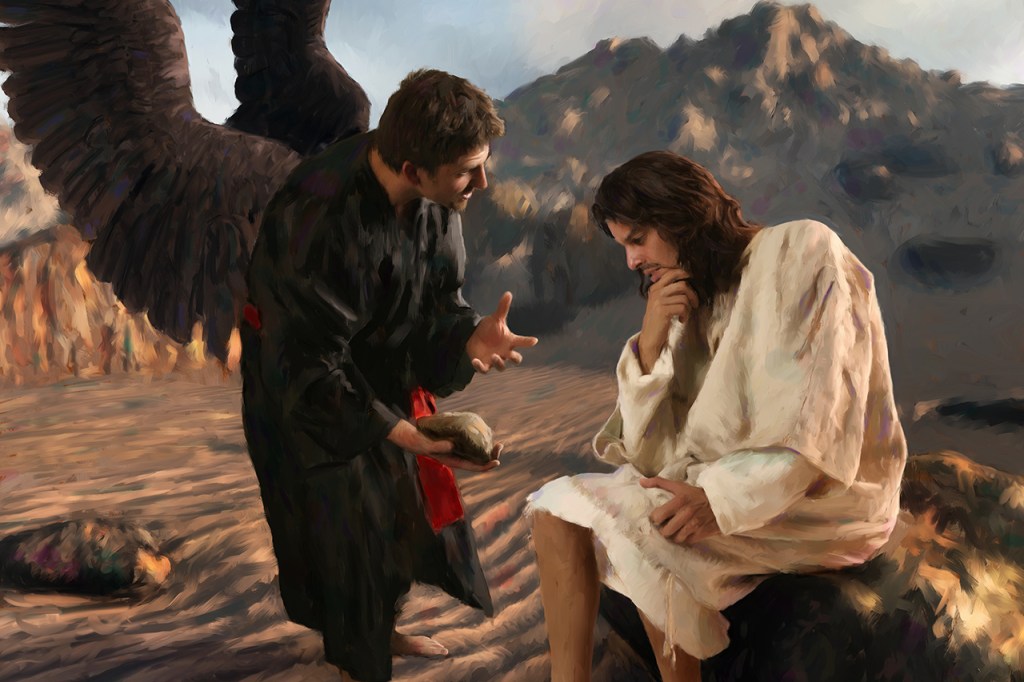
Who is Satan and where has he been? Some people think of Satan as a cartoon character with horns and a pitchfork, others view him as an abstract force of evil. Although we aren’t real sure what Satan looks like, from future readings we know who he is. Basically, Satan was once an angel named Lucifer, who was the most prominent of the other angels. He wanted to have the same power as God, God didn’t agree and kicked him out of Heaven. We don’t receive this information about Satan until the New Testament. Where has Satan been throughout the Old Testament? We see him in Genesis as the serpent, and possibly a few more hints of him but he is never actually mentioned until now. Was he behind all of the corruption throughout the book of Judges? We don’t know, but what I want to know is does he have access to heaven?
I would assume that entering into Heaven wouldn’t be an easy task for someone that is full of evil and wants the power of the protagonist. The text isn’t clear whether or not he can come and go as he pleases, or only by the approval of the protagonist.
Was he approved to enter Heaven, because the protagonist knew that he would win the argument with Satan over Job? Satan was stating that Job only worshiped God, because God blessed him with wealth. Job refused to curse God even after his wealth was taken. I am sure at this point the protagonist laughed to himself. So did he allow Satan to return a second time because he knew what Job’s actions would be? Well, Satan appeared before God again and stated that is was only because Job had his health that he worshiped God. And as we already know the protagonist won this argument as well.
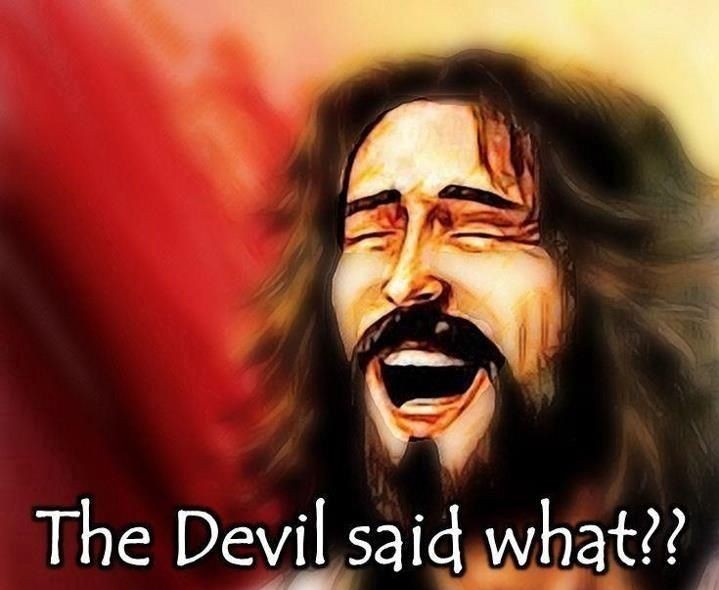
Can Satan just show up when he wants to? As difficult as it may seem, yes he can. If we read ahead, actually the last book of the Bible, we see that Satan does in fact have access. Revelations 12:10 states “And I heard a loud voice in heaven, saying, “Now the salvation and the power and the kingdom of our God and the authority of his Christ have come, for the accuser of our brothers has been thrown down, who accuses them day and night before our God.”
Until this happens in the final years of time, Satan has access to the protagonist and Heaven. But at the midpoint of the Tribulation, Satan will finally be barred from entering into the presence of the Protagonist. Since we do not know when this will happen, we do know that the time period during the book of Job is before this event in Revelations. So if the Bible is chronological order and this Tribulation hasn’t already occurred, then Satan does have access to Heaven.
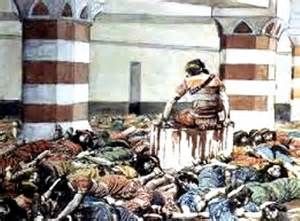
The Book of Judges mentions 13 leaders. These leaders get the term “judges” from the text stating that each of them “judged Israel.” But not all actually say that, the text states only 11 actually “judged Israel”. Most websites and biblical resources account for just 12 judges. These resources consider the 11 mentioned above plus Gideon, although Gideon was never mentioned in the text to “judge Israel.” Why do these resources count Gideon as a judge but not abimelech? Should abimelech be considered a judge of Israel?
Abimelech became leader of Israel after his father Gideon died. Abimelech was one of Gideon’s seventy sons. He wasn’t chosen by the protagonist to lead Israel, rather he “appointed” himself. He went to Shechem to meet his mother’s relatives, sometimes translated to his mother’s brothers, so we assume he went to speak with his uncles. He told them, “Say in the ears of all the leaders of Shechem, ‘Which is better for you, that all seventy of the sons of Jerubbaal rule over you, or that one rule over you?’ Remember also that I am your bone and your flesh.” (Judges 9:2)

The uncles then persuaded the leaders of Shechem to allow Abimelech to be the “ruler” because he was of their blood. So they paid him in silver and Abimelech then hired worthless and reckless followers. To make the decision easier for the leaders, Abimelech killed all but one of his brothers.
“And he went to his father’s house at Ophrah and killed his brothers the sons of Jerubbaal, seventy men, on one stone. But Jotham the youngest son of Jerubbaal was left, for he hid himself. 6And all the leaders of Shechem came together, and all Beth-millo, and they went and made Abimelech king, by the oak of the pillar at Shechem.” (Judges 9:5-6)
Later in his rein Abimelech was told that all of the leaders were gathered in the Tower of Shechem. Abimelech and his men cut down brush, piled the brush around the Tower of Shechem and set fire to it. This burned and killed about a thousand men and women.
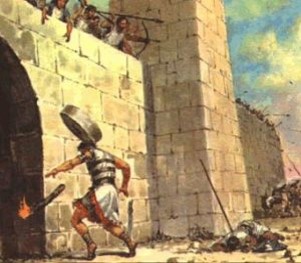
Abimelech then went to Thebez, the men and women along with the leaders fled to a tower in Thebez. Abimelech was about to set fire to this tower as well, until a woman on the top of a building threw down a millstone ( a heavy stone used to grind grain) and crushed his skull. Before this could kill him, he told one of his men “Draw your sword and kill me, lest they say of me, ‘A woman killed him.'”(judges 9:54). Abimelech was then dead.
What should be noted is that the protagonist is the one that “raised up” the leaders. Although Gideon was never said to “judge Israel” he was given the reins by the protagonist. Gideon was also a prominent ruler because he actually freed the Israelites from the Midianites. Because of his accomplishments Gideon is considered one of the “Judges”.
Abimelech on the other hand did the opposite. He didn’t save the Israelites at all, instead he brought trouble among them. So the protagonist had Abimelech killed, “God returned the evil of Abimelech, which he committed against his father in killing his seventy brothers.”(Judges 9:56)
My conclusion is that Abimelech was a ruler of Israel, a terrible ruler. He also wasn’t by definition a judge of Israel, he wasn’t appointed by the protagonist, and he didn’t save or free the Israelites from any of the oppressors so therefore he should NOT be considered a judge!
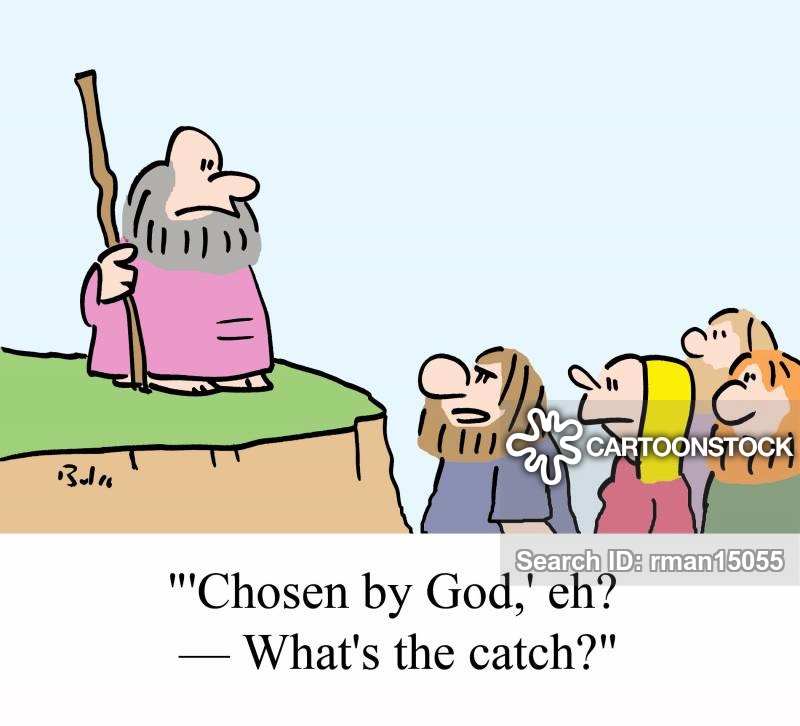
During times of war I have always been told by the elders of my family that the country Israel is not to be “messed” with because they are “God’s chosen people.” At a young age I didn’t question why they were the chosen people. I was actually disappointed that I wasn’t a chosen “one”.
Did the Israelite people do something special that granted them the chosen people award? Were they chosen because the size of their nation? Were they more holy than the other nations? No, they were just loved!
How do we know that the Israelite people are the chosen people, well Deuteronomy 7:6 states “For you are a people holy to the Lord your God. The Lord your God has chosen you to be a people for his treasured possession, out of all the peoples who are on the face of the earth.”
They weren’t chosen because they are a nation of many and powerful people such as the Greeks or Romans, actually the next verse states they are the smallest nation. “It was not because you were more in number than any other people that the Lord set his love on you and chose you, for you were the fewest of all peoples.”(Deuteronomy 7:7)
The only reason of “choseness” we are given comes from Deuteronomy 7:8 “but it is because the Lord loves you and is keeping the oath that he swore to your fathers, that the Lord has brought you out with a mighty hand and redeemed you from the house of slavery, from the hand of Pharaoh king of Egypt.”
So they didn’t do anything to deserve the award, the protagonist just loved them! To be so loved, were they holy? Not at all, the protagonist states in Deuteronomy 9:6 that they were stiffnecked or stubborn people!
“Understand therefore, that the Lord thy God giveth thee not this good land to possess it for thy righteousness; for thou art a stiffnecked people.” (NKJ)
They were loved because they accepted the covenant at mount Sinai. We are given this evidence in a previous book. Exodus 19:5 says “Now therefore, if you will indeed obey my voice and keep my covenant, you shall be my treasured possession among all peoples, for all the earth is mine,”
So thanks to Moses running up and down the mountain, in verse 8 the Israelite people accept the covenant by saying “All that the Lord has spoken we will do.”
From one Jewish perspective, the answer is fascinating. https://www.myjewishlearning.com/article/are-the-jewish-people-chosen/The website My Jewish Learning states in the article “Are Jews the Chosen People?” This article says “God first offered the Torah to the children of Esau, the children of Ammon and Moab, and the children of Ishmael, but when they were told about the Torah’s prohibitions against murder, adultery, and robbery, respectively, they turned down the offer. Only after going to every nation in the world did God finally offer the Torah to the Jews.”
In the past I have had the opportunity to visit Glacier National Park in northern Montana. While there I visited a visitors center that had a sculpture that was a small scale of the surrounding mountains. Off to the side of this sculpture were facts of how the glaciers sculpted the valleys and mountains in the park. Glaciers are moving sheets of ice, as glaciers moved they carved the lowlands and scratched away the sides of the mountains. I asked a geologist where the ice actually came from and he told me it was from the Ice Age. I then asked,”Where did the water come from?” Scientists are still unsure.
There are two main ingredients for an ice age, cool summers and lots of snow. So how do we get cool summers? Well the sun’s radiation needs to be reduced drastically. Scripture indicates that majority of the water for the flood came from within the earth, “all the fountains of the deep burst forth.” If we assume that the fountains of the deep are pockets of lava heated from the earth’s core, and once erupted there will be a significant amount of volcanic ash in the atmosphere, thus blocking a portion of the sun’s heat for up to three years. with this amount of blockage the earth will the become much cooler.
Where does the abundance of snow come from? Well, if all the magma is deposited into the water on the surface of the earth, the oceans will become warm. With this warm water and cool air for a substantial amount of time there would be enormous amount evaporation which produces massive amounts of snow in the higher latitudes. After substantial amounts of snow and freezing temperature the snow then becomes massive blocks of ice. This also didn’t happen progressively, this all happened in almost an instant compared to the amount of time scientist believe it took. So fast in fact, the animals among the land didn’t have time to escape, therefore mammoths and other creatures were instantly preserved.
So did the Flood of Genesis cause the Ice Age?

This is an example post, originally published as part of Blogging University. Enroll in one of our ten programs, and start your blog right.
You’re going to publish a post today. Don’t worry about how your blog looks. Don’t worry if you haven’t given it a name yet, or you’re feeling overwhelmed. Just click the “New Post” button, and tell us why you’re here.
Why do this?
The post can be short or long, a personal intro to your life or a bloggy mission statement, a manifesto for the future or a simple outline of your the types of things you hope to publish.
To help you get started, here are a few questions:
You’re not locked into any of this; one of the wonderful things about blogs is how they constantly evolve as we learn, grow, and interact with one another — but it’s good to know where and why you started, and articulating your goals may just give you a few other post ideas.
Can’t think how to get started? Just write the first thing that pops into your head. Anne Lamott, author of a book on writing we love, says that you need to give yourself permission to write a “crappy first draft”. Anne makes a great point — just start writing, and worry about editing it later.
When you’re ready to publish, give your post three to five tags that describe your blog’s focus — writing, photography, fiction, parenting, food, cars, movies, sports, whatever. These tags will help others who care about your topics find you in the Reader. Make sure one of the tags is “zerotohero,” so other new bloggers can find you, too.

 Old Testament